|
|
|
The IAOPA Europe newsletter is sent out approximately every second month keeping you up-to-date about General Aviation in Europe.
Your privacy of course is guaranteed and you can unsubscribe anytime with one click on the unsubscribe link in the newsletter.

For older editions of IAOPA Europe Enews please click here to visit our newsletter archive
For older editions of IAOPA Europe Enews please click here to visit our newsletter archive
For older editions of IAOPA Europe Enews please click here to visit our newsletter archive
For older editions of IAOPA Europe Enews please click here to visit our newsletter archive
For older editions of IAOPA Europe Enews please click here to visit our newsletter archive
For older editions of IAOPA Europe Enews please click here to visit our newsletter archive
For older editions of IAOPA Europe Enews please click here to visit our newsletter archive
Take a look at the upper right corner of this webpage and just enter your email to sign up to receive the IAOPA Europe Enewsletter. Every second month you will then receive our Enewsletter keeping you up-to-date about General Aviation in Europe.
Your privacy of course is guaranteed and you can unsubscribe anytime with one click on the unsubscribe link in the newsletter.
|
What IAOPA Europe does for you
|
Watch the video to learn about what IAOPA Europe is doing to support pilots and aircraft owners all over Europe and why you should be part of the AOPA community.
If you like it, you can follow us on youtube where we release new videos from time to time |
|
Overview of member benefits
|
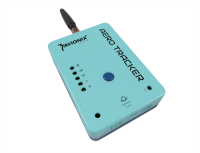
With a growing list of member benefits we have now compiled a list of member benefits available to members of affiliates of IAOPA Europe. The lists has been constantly growing with partners such as Foreflight, Jeppesen, TopMeteo & Safesky. The latest addition is AVIONIX who specialized in electronic conspicuity devices. The most advanced is the Aerotracker which receives both ADS-B, Flarm, OGN and ADS-L traffic and also integrates with SafeSky to give the most comprehensive picture of traffic around you displayed directly in for instance your Foreflight app. As a member of IAOPA Europe you get 15% discount in this safety enhancing device. Please check the list at www.iaopa.eu/memberbenefits We will update the list regularly as new benefits are added |
|
August issue of the UK AOPA Magazine is out
|
Download as a PDF for offline reading
For older editions of the UK AOPA Magazine please visit the archive |

|
Cost-Sharing flights under renewed scrutiny across Europe
|
Recent developments in several European countries highlight the growing focus on cost-sharing flights — and the need for clarity in how rules are applied. In Finland, a case is developing where the national CAA claims a pilot operating cost-sharing flights is effectively running a commercial operation because the aircraft is privately owned. The UK has recently tightened its approach following the high-profile Sala accident, which involved an illegal charter flight. Starting in October, UK pilots conducting cost-sharing flights must ensure passengers pay an equal share of the cost. Passengers are also required to fill out a participation form, which the pilot must keep for six months — allowing investigators to confirm compliance if necessary. According to AOPA UK’s Martin Robinson, these changes are intended to make enforcement easier but will likely have limited impact on illegal charter flights due to limited oversight resources. In Denmark, a case was previously taken to court by the CAA seeking to convict a pilot for not paying an equal share of the costs on a cost-sharing flight. The court dismissed the case, ruling correctly that EU regulations only require the pilot to pay a share, not necessarily an equal one. This ruling reinforces the principle that cost-sharing flights remain a legal way for private pilots to defray operating costs, provided they do not turn into disguised commercial operations. One of the open questions that still causes confusion and uncertainty is what can be considered ‘direct costs’ eligible for sharing and here the discussion centers on costs for items like insurance, maintanance and hangar. If a pilot rents an aircraft the entire rent is obviously a direct cost even if part of the rent is set obviously covering these elements. If the pilot owns the aircraft himself it does not seem logical that the same elements could not be taken into account when calculating 'direct costs'. This question remains open and could have wide-reaching implications for GA pilots across Europe. IAOPA Europe is monitoring these developments closely, as several CAAs may look to replicate the UK model or even pressure EASA to revise its rules. ‘This is another example of regulators trying to solve a problem that may not really exist — while creating new burdens for legitimate GA activity,’ Martin Robinson noted. What is a cost-sharing flight?
Under EU Regulation (EU) No 965/2012 (Part-NCO), private pilots may share the direct costs of a flight with up to five passengers, provided the pilot also contributes to those costs. Direct costs typically include fuel, oil, landing fees, and — if applicable — aircraft rental fees. The flight must be genuinely non-commercial: the pilot cannot make a profit and cannot be ‘holding out’ by offering air transport as a service. |