|
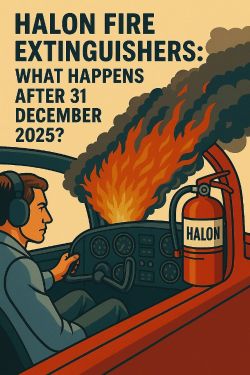
Halon Fire Extinguishers: What happens after 31 December 2025?
From 1 January 2026, all remaining exemptions for Halon fire extinguishers in European aviation will end, and the EU Commission has confirmed that no further extensions will be granted. This puts many aircraft owners in a difficult situation since the only approved alternative "Halotron" is not available on the market in sufficient quantities. Further, airlines are competing for the few extinguishers available in the market driving up the prices to disproportionate levels somewhere between €2.000 and €4.000 for a single extinguisher.
If you are not able to source a halotron extinguisher before the end of december there is no really good solution in sight. We have however tried to outline some useful facts which can help the individual aircraft owner decide for himself the best course of action.
Aircraft below 1.200kg MTOW:
If you are flying an ELA1 aircraft (MTOW below 1.200 kg) you have more options, since a fire extinguisher is not mandatory according to EU regulation NCO.IDE.160.
This means you can legally remove the halon extinguisher from the aircraft provided it is not part of the certification of the aircraft. For the majority of ELA1 aircraft, fire extinguishers are not part of their certification. In practice you can check in the AFM if the aircraft has the fire extinguisher listed as an optional or a mandatory item. This would mean you would be flying without a fire extinguisher. You would be legal, but it is certainly not an ideal solution. To compensate for the missing installed halon extinguisher you could consider to bring a typical car fire extinguisher in your handbag. You would still be legal and a little bit better off against a fire, but certainly not ideal. All common extinguisher types have severe drawbacks when used in the confined space of an aircraft cockpit.
A CO2 extinguisher takes away the oxygen and creates a severe risk that occupants will pass out. A powder extinguisher is severely corrosive so if used inside an aircraft the aircraft is almost certainly a total write-off. A water or foam extinguisher is far from ideal for electrical fires and could destroy your avionics.
Not even the new halotron extinguishers are advisable or healthy to use inside a small cockpit, and when deciding on the best course of action it is also worth noting that actually using an extinguisher in a cockpit is an exremely rare occurance. EASA has reviewed all inflight fire and smoke incidents involving ELA 2 aircraft in the past decade. Only three cases were recorded, two of them in hot-air balloons, and none resulted in serious injury. Cockpit fires in conventional light aircraft are extremely rare; when fires do occur, they tend to originate in the engine compartment or the brakes, where standard EN3 household extinguishers are sufficient. For lithium-battery problems, a fire-containment bag is a more appropriate safeguard than a cabin extinguisher.
Aircraft above 1.200kg MTOW:
If you are flying an aircraft over 1.200kg there is no legal way to keep operating in the new year without a fire extinguisher installed. Interestingly however, it is worth noting that keeping your Halon fire-extinguisher does not mean that your aircraft is grounded or not airworthy according to European aviation regulation. EASA has made this clear in a communication published November 6'th: "An infringement of Regulation (EU) 2024/590 with regard to halon fire extinguishers on aircraft beyond the envisaged end-date would not have an impact on the aircraft’s airworthiness. There are also no grounds under Regulation (EU) 2018/1139 that would oblige Member States to ground an aircraft for non-compliance with the end-date referred to in Regulation (EU) 2024/590."
How authorites would handle such a scenario could vary from country to country. As mentioned, if you are flying an ELA1 aircraft you will in most cases have the option to simply remove the fire extinguisher and be perfectly legal (but less safe).
How to equip
Should you be able to actually obtain an approved extinguisher for your aircraft it can in many cases be installed using CS-STAN in accordance with CS-SC108a or CS-SC109a for either existing or new installations. Note however, that according to these instructions the new extinguisher must satisfy ETSO-2C515 or equivalent standards which limits the options and makes it very hard to find a suitable extinguisher before the deadline. The alternative to using CS-STAN would be an STC or an approved minor modification.
IAOPA Europe is working with EASA and the European Commission to ensure that fire extinguishers used in non-commercial Part-NCO operations can be considered non-installed equipment, which would remove the need for aviation-specific certification. Given the extremely low incidence of cockpit fires, we believe the use of Halotron-2 extinguishers should remain voluntary. IAOPA Europe will inform members immediately when new developments occur.
For more info please see these google translated links to AOPA germany:
November article
December article
Now you can donate directly to IAOPA Europe
By being a member of a European AOPA organization you already contribute to the work of IAOPA Europe. Members have asked us if it is possible to donate directly to IAOPA Europe and for this purpose we have now created a Paypal link which makes it easy for you to directly support our work for European General Aviation. Please use the link here or click in the box below.
IAOPA Europe Regional Meeting held in Zürich
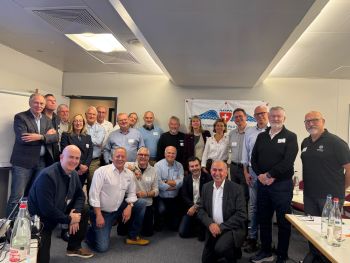
The 152nd IAOPA Europe Regional Meeting took place on 25 October 2025 at the Crowne Plaza Hotel in Zürich, hosted by AOPA Switzerland. Delegates from across Europe gathered for a full day of discussion on regulatory, technical, and organizational developments in General Aviation.
Chairman Roland Kaps of IAOPA Switzerland and Dr Michael Erb, vice-president of IAOPA EU, opened the meeting, followed by approval of the agenda, previous minutes, and the 2026 budget, which keeps member contributions unchanged. Treasurer John van Asperen confirmed that IAOPA Europe now holds official legal status as a registered association, marking an important step for structural and financial transparency.
Key agenda items included updates on unleaded Avgas, EASA’s rule simplification project, and the ongoing proposal for medical reform, led by Peter Prukl (AOPA Spain) (see elsewhere in this newsletter). Delegates discussed reducing the cost and administrative burden of medicals while maintaining safety.
The meeting also featured reports on ForeFlight’s European developments, Capzlog’s digital logbook, and an online update from AOPA US President Darren Pleasance on the progress of MOSAIC and the transition to unleaded fuel in the United States.
Other topics included electronic conspicuity, social media outreach, and coordination with GAMA and EASA on GA advocacy.
The next IAOPA Europe Regional Meeting (RM 153) will be held in Denmark in May 2026.
ForeFlight Introduces European Logbook Support to Simplify Flight Logging and Reporting for Pilots in Europe
ForeFlight announced support for its integrated Logbook in Europe, delivering a streamlined flight logging experience tailored to the needs of European pilots. The update implements a new Logbook Region setting with options for both U.S. and Europe, the latter of which replaces U.S.-specific field names, recency tracking, and reporting formats with European versions in accordance with flight logging standards and guidelines defined by the European Union Aviation Safety Agency (EASA).
With this new region setting, pilots can log flights, track recent experience, and generate detailed reports using tools aligned with European practices. Switching to the European Logbook automatically updates key elements throughout Logbook, including field terminology, license and qualification tracking, and progress reports for skill tests such as PPL, LAPL, and night ratings. A new FCL.050-style report template provides standardized flight time summaries for selectable date ranges, reflecting the reporting format defined in EASA Part-FCL.
These updates provide pilots with an easier way to maintain detailed, standards-based records aligned with European aviation authorities such as EASA. European Logbook support will be available to all ForeFlight customers on December 2. Visit the ForeFlight website to learn more.
ZeroAvia granted €21M EU funding for world’s first Hydrogen Aircraft Network in Norway
ZeroAvia has been selected by the EU’s Innovation Fund for a €21.4 million grant to launch Project ODIN (Operations to Decarbonize Interconnectivity in Norway)—the first introduction of hydrogen-electric aircraft within the European Economic Area.
The project will see 15 Cessna Caravans retrofitted with ZeroAvia’s ZA600 hydrogen-electric engines, alongside the rollout of hydrogen refuelling and storage infrastructure at 15 Norwegian airports. Operations are slated to begin in 2028, creating the world’s first large-scale network of zero-emission commercial flights. Cargo routes currently served by kerosene turboprops will be replaced, targeting over 95% reduction in greenhouse-gas emissions.
The European Commission awarded the project the STEP Seal, recognising hydrogen-electric aviation as a strategic technology for Europe. ZeroAvia has already flown a ZA600 prototype and is advancing certification programmes with both the UK CAA and FAA. Air operators for the new network will be announced later.
ICAO Updates: AI, Mental Health and Training Innovations
IAOPA’s ICAO Representative Frank Hofmann reports that the Air Navigation Commission has resumed work following the ICAO World Assembly, focusing on safety priorities and new technologies.
Artificial Intelligence will play a greater role in ICAO’s Global Aviation Safety Plan, particularly in safety analysis and clear air turbulence detection. The Commission also noted an increase in mid-air collision risk over the North Atlantic, mainly linked to vertical separation issues as traffic continues to grow.
Mental health and peer support programmes were a major topic at Assembly 42. ICAO now recognizes the importance of human performance in aviation safety, although many States still lack the data needed to make informed policy decisions, such as whether to raise the airline pilot age limit to 67.
ICAO is also advancing standards for Remotely Piloted Aircraft Systems (RPAS) but has opted against early adoption in favour of a complete package by 2030. A new generation of simulators featuring Simulated Air Traffic Control Environments (SATCE) was presented as a major step forward in pilot training.
The report also noted the successful IAOPA Europe Regional Meeting in Zürich, where members discussed medical reform, MOSAIC, and unleaded fuel initiatives.
AOPA Luxembourg reopens talks on AVGAS 100LL transition
AOPA Luxembourg has renewed its dialogue with the Ministry of the Environment (AEV) on the future of AVGAS 100LL, ahead of a broader stakeholder meeting. AOPA reiterated the AEV’s main priorities: assessing potential health risks from TEL exposure, examining certification and engine-compatibility issues in any shift to unleaded fuel, and identifying practical measures to limit ground-level exposure.
Clarifications from the European Commission confirm that AVGAS 100LL remains legal, that REACH rules restrict only the import of TEL and not blended AVGAS, and that reported limitations in Belgium were commercial rather than regulatory. These points help place the Luxembourg discussion on a factual footing.
AOPA Luxembourg has also requested that the Findel flying organisations take part in the meeting so operational, training and maintenance perspectives are fully represented. The association continues to advocate a constructive, technically informed approach.
The Ministry notes that while the Commission’s position is clear, its earlier concerns remain. In parallel, it wishes to explore the future availability of unleaded alternatives such as UL94 or 100UL at Luxembourg Airport, which are currently not offered. LuxFuel will therefore be invited to participate.
For now, the process remains an open, collaborative exchange. The upcoming stakeholder meeting is intended to widen the discussion and determine next steps.
Part-IS: a disproportionate burden for small operators?
The introduction of Part-IS information security rules is causing considerable concern among the organisations affected. IAOPA and its national AOPAs are in discussion with EASA and national ministries, including the German Federal Ministry of Transport, to ensure that small flying schools and maintenance organisations are not forced into large, complex cyber-security management systems that are disproportionate to their actual aviation risk.
From our point of view, a proportionate approach means strictly separating safety-related risks from purely economic or administrative risks, exactly as outlined in Article 1 of Regulation (EU) 2022/1645. Authorities should focus on the limited set of risks that could genuinely affect flight safety. If the accounting software of a flying school is hacked, that is certainly annoying for the business—but it is not an aviation safety issue and should not be treated as such by aviation authorities.
In many small schools, even aircraft above 2,000 kg MTOM are only connected to the internet for regular navigation database updates, so the realistic safety-related threat surface is quite narrow. This is a completely different situation from highly connected Boeing or Airbus aircraft. IAOPA is therefore preparing template manuals for small organisations, showing how they can achieve a high level of protection in this specific area with minimal administrative burden. After some initial hesitation, EASA is now open to simple, largely standardised solutions.
It is important that organisations falling under Part-IS contact their competent authority in good time before the rules apply on 22 February 2026, and submit at least a basic concept. EASA has granted Member States an 18-month transition period after entry into force before full implementation, which authorities are expected to pass on to industry.
Flying schools and maintenance organisations interested in a template manual for Part-IS are invited to contact IAOPA Europe by email at iaopa@iaopa-eur.org with the subject line Part-IS. As with the earlier ATO template manuals, our objective is once again to provide practical help with as little bureaucracy as possible.
Growing confusion around GA Medical Reform
There is widespread confusion within IAOPA Europe and differing perspectives surrounding efforts to reform medical requirements for General Aviation pilots. While EASA technically allows member states to accept LAPL medicals issued by general practitioners, no national authority has implemented this option, leaving pilots dependent on an increasingly limited pool of AMEs.
Discussions with EASA officials show internal divisions: some support IAOPA’s proposal for self-declaration, while the agency’s aeromedical experts remain sceptical and insist on physician involvement. A GP-issued medical with adjusted standards is being presented as the most realistic interim step.
AOPA-USA emphasised that similar reforms in the US required decades of political pressure, stressing that medical incapacitation in GA accidents is extremely rare. IAOPA Europe will therefore need to act both at EU level and within member states, clearly defining the problems pilots face and building political support to overcome bureaucratic resistance.
Merry Christmas and Happy New Year from IAOPA Europe!
As 2025 comes to a close, IAOPA Europe extends its warmest wishes to all our members, partners, and friends across the continent and beyond.
This year has once again shown the strength, passion, and resilience of the General Aviation community. Your dedication—whether in the cockpit, in maintenance hangars, in clubs, or in national associations—continues to move GA forward.
We wish you and your loved ones a wonderful Christmas, peaceful holidays, and a very Happy New Year.
May 2026 bring you blue skies, cooperative weather, and many safe and enjoyable flights.
Thank you for your continued support and engagement. We look forward to flying into the new year together.
Keep us informed
If you have any news or things that you would like to share with pilots in other countries - for instance if you organize a Fly-in that might be of interest or if there is news about airports or new rules and regulations in your country that other pilots should know.
Please don't hesitate to send all your news to me: Gerrit Brand | Netherlands | email: gerritbrand@hotmail.com, telephone or whatsapp + 31 6 50831893
|






_300x327.jpg)