154th RM IAOPA Europe in Bad Homburg ahead of World Assembly
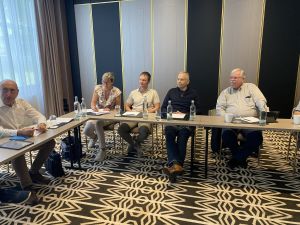
IAOPA Europe held its 154th Regional Meeting at the Steigenberger Hotel in Bad Homburg, Germany, on 29 September 2026. Organised alongside the IAOPA World Assembly, the meeting brought European representatives together for an afternoon session before the Assembly’s official opening. Chaired by Michael Erb, it covered issues ranging from pilot medical requirements and electronic conspicuity to the resilience of navigation services.
An important part of the agenda was preparing European positions on two proposed World Assembly resolutions. The first concerned more proportionate medical requirements for private pilots and better international recognition of equivalent medical standards. Delegates discussed self-declaration and assessment by general practitioners, emphasising the need for supporting safety data and cooperation with national authorities. Mutual recognition could help reduce administrative burdens and make cross-border flying easier.
The second proposal addressed a harmonised European approach to ADS-B and the use of 978 MHz Universal Access Transceiver (UAT) technology. Discussions covered ground infrastructure, compatibility with other electronic conspicuity systems and the potential delivery of weather and aeronautical information to the cockpit. Proportionate installation requirements and affordable options for the existing aircraft fleet were central concerns.
Joining online from Sweden, Martin Antvik reported on work relating to Performance-Based Navigation regulations. He highlighted the need to retain conventional approaches as a fallback and ensure that air navigation services can continue during interference with satellite navigation signals. Approaches to non-instrument runways also remain an important area of work. Members with relevant operational experience or suggestions are encouraged to contact him at martin.antvik@aopa.se.
Roland Kaps presented the Coordination Team’s activities and draft communication plan. Current priorities include aviation fuel availability, safety and the integration of drones into European airspace.
Delegates approved the 2027 budget presented by treasurer John van Asperen. They also discussed AOPA UK’s withdrawal from membership of the IAOPA Europe association, expressing regret while leaving the door open to future cooperation. Concerns were raised about EUROCONTROL’s requests for documentary evidence of aircraft maximum take-off mass.
IAOPA World Assembly: a shared agenda for the future of general aviation
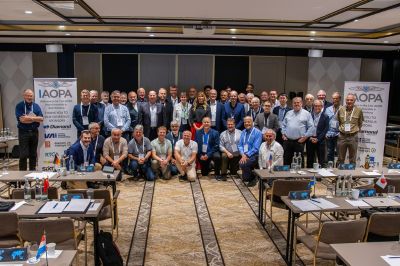
The 31st IAOPA World Assembly, held in Bad Homburg from 29 September to 2 October 2026, brought together more than 100 participants from general aviation associations, aviation authorities and industry organisations worldwide. Among them were over 70 IAOPA delegates representing 25 countries. Participants included Katie Pribyl and Jim Coon from the United States. Contributions from EASA Executive Director Florian Guillermet, FAA representatives, GAMA and Europe Air Sports provided valuable opportunities for direct dialogue between general aviation and its regulators.
A central theme was the need for proportionate, risk-based regulation that improves safety while keeping flying accessible and affordable. Discussions highlighted opportunities for EASA and the FAA to learn from each other’s initiatives, align requirements and give pilots and aviation organisations greater responsibility. Certification must also allow general aviation to benefit from new technology without imposing disproportionate costs.
Affordable electronic conspicuity featured prominently, both as a safety tool and as a prerequisite for sharing airspace with drones. The Assembly adopted an IAOPA Europe resolution calling on European AOPAs to encourage their national authorities to introduce 978 MHz UAT, supporting access to current traffic, weather and airspace restriction information in the cockpit. EASA recognised the significant safety benefits of this approach.
Pilot medical requirements were another priority. Delegates discussed the experience gained with medical frameworks below ICAO standards and the scope for a more proportionate approach. Improving IFR access to smaller airfields was also high on the agenda: instrument approaches can enhance safety and make aircraft and airports more useful, but regulatory complexity and limited resources continue to slow progress in Europe.
The transition to unleaded aviation fuel prompted discussion of compatibility, certification and reliable availability across the airfield network. Electric propulsion offers further opportunities, although its practical limitations remain significant. Other sessions addressed maintenance costs, access to technical information, the simplification of Part-66 requirements and ways to attract young people into aviation.
The Assembly also marked a leadership milestone: Katie Pribyl from the United States was elected as IAOPA’s first female President. She took over from Michael Erb, who, as Senior Vice President, had led IAOPA during the interim period following the vacancy in the presidency.
The event concluded at Frankfurt-Egelsbach airfield, where participants had the opportunity to experience electric flight and local sightseeing flights before the closing dinner. Throughout the Assembly, IAOPA’s worldwide network demonstrated its shared commitment to protecting the freedom to fly through constructive cooperation with regulators.
You can watch a short video with highlights from the event here
Towards more proportionate pilot medical requirements in Europe
IAOPA Europe and Europe Air Sports are joining forces to secure simpler, more proportionate medical requirements for private pilots. Their initiative calls for a Pilot Medical Declaration (PMD) to replace conventional aeromedical certification for defined categories of light, non-commercial flying.
The organisations argue that medical certification can involve considerable expense, administrative work and delays without delivering a corresponding safety benefit. A declaration system could make general aviation more accessible while maintaining an acceptable level of safety.
Under the proposal, pilots would declare their fitness against medical criteria based on the EU Group 1 driving standards. The system would cover non-commercial operations in aeroplanes below 2,730 kg maximum take-off mass, helicopters below 1,200 kg, and sailplanes and balloons, with no more than four occupants, including the pilot. Declarations would remain valid for five years for pilots under 60 and two years for those aged 60 or over.
The four-person limit concerns occupants, rather than installed seats, allowing a broad range of privately operated aircraft to qualify. The precise limits remain subject to discussion with regulators.
The safety case focuses on actual accident causes. The draft position paper argues that most general aviation accidents involve weather, loss of control or decision-making rather than sudden medical incapacitation. Its authors therefore question whether conventional medical screening delivers benefits proportionate to its administrative burden.
Experience outside the EU supports the case for reform. The United Kingdom introduced its Pilot Medical Declaration system in 2016. In the United States, BasicMed has provided an alternative to conventional certification since 2017, although it still requires periodic physician examinations and medical education. The draft paper cites a 2023 FAA report that found no significant difference in accident risk or severity between BasicMed pilots and those holding traditional medical certificates.
The initiative supports the “Declared by Default” direction of EASA’s Flightpath 2030+. According to the position paper, EASA’s General Aviation Community Steering Group accepted the Europe Air Sports proposal as a work package item in April 2025. This provides a basis for further work; a European PMD system has yet to be approved and introduced.
By presenting a united position, IAOPA Europe and Europe Air Sports aim to strengthen their dialogue with EASA and European policymakers. Their priority is to establish medical declarations within a clearly defined scope, with possible expansion informed by experience.
The benefits could extend beyond current pilots. Accessible light aviation introduces young people to flying, engineering and other aviation careers. Removing disproportionate barriers would help sustain that pathway while keeping responsibility for fitness to fly firmly with the pilot.
Denmark proposes mandatory ADS-B Out from next year
The Danish CAA has recently published a proposal to introduce mandatory ADS-B Out for all type-certificated aircraft operating in Danish class G airspace. According to the proposal the requirement will be effective already next year and will affect both Danish and foreign registered aircraft crossing Danish airspace. At the same time all controlled airspace will be reclassified as TMZ airspace where a transponder is mandatory (mode A/C or S). Gliders and ultralight aircraft are initially exempt but the proposal envisions mandatory ADS-B or ADS-L for these aircraft.
It is estimated that less than 30% of the European GA fleet currently is equipped with ADS-B Out and if the proposal is adopted as is, it would therefore imply that more than 2 out of 3 General Aviation aircraft in Europe would effectively be banned from crossing Danish Class G airspace or from flying to the majority of Danish airfields since these are uncontrolled.
The Danish CAA recognises that the requirement for ADS-B Out is not in compliance with Part-SERA or other relevant EU regulation but argues that it is necessary for 'reasons of national security' and base the legality of the proposal on the safeguard provisions of EU 2018/1139 Article 70.
AOPA Denmark has alerted its members and relevant EU Authorities and is currently collecting data to get full picture of the implications.
AOPA is in general very positive when it comes to ADS-B and electronic conspicuity and the safety improvements these technologies provide. However, the Danish approach highlights the problems it creates if a single country on very short notice introduces equipment requirements that are significantly different from neighboring states.
Further the whole legal basis of the proposal is very shaky and the procedure set out in Article 70 implies that both EASA and the EU Commission must either approve or reject the Danish measure. This opens for an interesting legal situation if the measure is not approved by the EU Commission, since this could make the Danish State liable to pay compensation to aircraft owners who upgraded their aircraft to comply with the regulation.
Operationally the proposal also introduces complications and flight safety concerns: since equipment requirements would be higher in uncontrolled airspace than in controlled airspace what happens if an aircraft without ADS-B Out that planned to fly in controlled airspace needs to divert to an uncontrolled airport? It would seem it cannot legally take off again without an exemption from the Danish CAA. This now introduces flight safety concerns since pilots might go a long way to try to stay in controlled airspace in order to avoid being stranded.
The proposal can be found here (in Danish)
Cross-border VFR: when is a flight plan required?
A short VFR flight across a European border can involve different flight-planning requirements on either side. Pilots should therefore check the rules for the entire route, even when flying between two uncontrolled airfields.
Under SERA.4001(b)(5), a flight plan is required for flights across international borders unless the states concerned prescribe otherwise. National exceptions may simplify certain cross-border VFR flights, but their scope and conditions need careful checking. Flying within the Schengen area does not, by itself, remove the flight-plan requirement.
Before departure, consult the current AIPs of the departure, transit and destination countries, particularly ENR 1.10, together with relevant NOTAMs. An exception to the border-crossing requirement does not cancel other flight-plan obligations, including those for flight portions receiving air traffic control service, designated areas or routes, and night flights beyond the vicinity of an aerodrome.
Separate requirements may also apply to customs, immigration, prior notification and aerodrome permission. An exemption from filing a flight plan should therefore never be read as an exemption from all pre-flight formalities.
Where filing is optional, a flight plan can still support alerting and search and rescue. Pilots choosing to file should ensure that it is activated and closed as required. For European touring pilots, the practical message is straightforward: check the whole route, rather than relying on a general list of countries.
AOPA Monaco highlights safety and innovation
AOPA Monaco’s Summer 2026 newsletter brings together regulatory developments and practical guidance for aircraft owners and pilots across Europe. Topics include GNSS jamming and spoofing, flight simulation training, airworthiness reviews and environmental policy affecting business aviation.
A feature on artificial intelligence explores its potential in predictive maintenance, route optimisation and compliance screening. Its central message is that operators should understand which decisions AI supports and which remain the responsibility of qualified people.
Together, these topics underline the importance of keeping operational procedures current while assessing how new technologies can support aviation safety and efficiency.
AviaMotion Media captures the IAOPA World Assembly
Those who attended the IAOPA World Assembly in Bad Homburg will have seen Monika and Finn of AviaMotion Media behind their cameras. The Hamburg-based team filmed the entire session and also produced the promotional film featured on the IAOPA Europe website at www.iaopa.eu.
Both bring aviation experience to their work. Monika holds a frozen ATPL and studied aerospace engineering. She develops the agency’s creative concepts and social media strategies. Finn holds a PPL and is a motor glider flight instructor, as well as the team’s videographer and editor.
Their familiarity with flying shapes the way they work. They understand aviation procedures, phraseology and apron safety, helping filming run smoothly while keeping safety central. As pilots themselves, they also understand the audiences their clients want to reach.
AviaMotion Media works with flight schools, business aviation companies, associations and aviation content creators. Its services include promotional films, photography, campaigns and social media strategy, alongside recruitment content to help organisations attract pilots, technicians and crew.
For IAOPA Europe, their work provides a valuable way to share the association’s activities and introduce its work to a wider audience. Their aim is to convey the fascination of aviation to those who already fly and those who have yet to discover it.
Contact: kontakt@aviamotionmedia.de
Please keep us informed about the aviation news in your country
If you have any news or things that you would like to share with pilots in other countries - for instance if you organize a Fly-in that might be of interest or if there is news about airports or new rules and regulations in your country that other pilots should know.
Please don't hesitate to send all your news to me: Gerrit Brand | Netherlands | email: gerritbrand@hotmail.com, telephone or whatsapp + 31 6 50831893
|