EASA allows 18-month transition for Part-IS; scope still unclear
European Union Aviation Safety Agency (EASA) has indicated that organizations under its direct oversight will be granted an additional 18 months to complete the implementation of Part-IS (Information Security). The transition period is intended to support the development of Information Security Management Systems to a fully operational level.
While this is a welcome and pragmatic step, uncertainty remains about its broader application.
The extension appears to apply only to organizations under EASA’s direct responsibility. It is unclear whether National Aviation Authorities (NAAs) will adopt the same approach for flight schools and operators under their oversight.
In addition, awareness of this flexibility is still limited, as communication from national authorities has been inconsistent.
IAOPA Europe is seeking clarification to ensure a harmonized implementation across all Member States.
EASA has accepted our request for a working-group addressing the matter of Part-IS Proportionality. The group has representatives from GAMA, EBAA, ECOGAS and IAOPA on board and will soon meet with EASA experts.
Standard Starlink plans limited to 100 mph
Starlink sent an email to users of its Roam and Priority satellite internet plans detailing a new maximum supported in-motion speed of 100 mph (87 knots), effectively limiting a Starlink device’s use under those plans in the vast majority of general aviation aircraft.
Many GA pilots worldwide have been using the Roam and Priority plans typically in conjunction with a Starlink Mini device to obtain internet access in their aircraft for enhanced situational awareness, or even passenger entertainment and connectivity.
Permitted speeds on the plans had been steadily dropping, with this newest change seemingly pushing all pilots toward Starlink’s newly created aviation plans—which come with 20GB monthly limits and start at $250 per month for up to 300 mph and $1,000 monthly for up to 450 mph—pricing the service beyond the budget of many if not most GA pilots. Previously, the monthly cost for Roam and Priority plans was between $50 and $65.
“A large number of general aviation operators across the globe have used Starlink as a safety-enhancing tool, and it is unfortunate that the company has now priced out the lion’s share of general aviation pilots,” said Jim Coon, AOPA senior vice president of government affairs and advocacy. “I hope Starlink will consider the concerns raised by pilots who have invested significant resources into the technology and are now faced with an incredibly steep rate hike, which will undoubtedly result in large numbers of subscription cancellations and less revenue for the company.”
A Change.org petition had amassed just over 4,000 signatures as of March 4 from pilots who had begun integrating Starlink into their flying.
Many are expressing their frustration, having already invested the hardware cost for the Starlink Mini Kit at $250. Some had even spent additional money for hardware to mount the units in their aircraft. Some high-performance turbine and jet operators might be pushed into even more expensive monthly plans, as the $1,000 aviation plan limit of 450 mph is still well below the cruise speed of those aircraft.
Starlink did not reply to AOPA’s request for comment.
Now AOPA and IAOPA have addressed a letter to Elon Musk raising the concerns regarding Starlink access from GA airplanes and requesting talks with Starlink on adequete access and cost for GA users.
You will find the letter from AOPA to Elon Musk here
AERO Friedrichshafen 2026: Europe’s GA hub returns in April
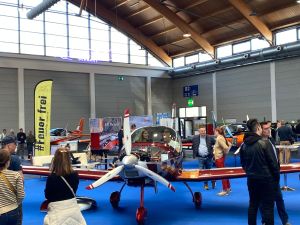
AERO Friedrichshafen 2026 will take place from 22 to 25 April 2026 at Messe Friedrichshafen, once again bringing together the global general aviation community on the shores of Lake Constance.
Widely regarded as Europe’s leading GA event, AERO is expected to host more than 750 exhibitors from around 38 countries and over 32,000 visitors, covering the full spectrum of aviation, from gliders and microlights to business jets and advanced air mobility concepts.
The 2026 edition will again highlight key industry themes such as sustainable propulsion, electric and hydrogen flight, and digitalization. The AERO Hydrogen & Battery Summit (21–22 April) will kick off the week with a strong focus on climate-friendly aviation technologies.
For GA pilots and operators, AERO remains a unique platform to explore new aircraft, avionics, and services, while engaging directly with manufacturers, regulators and associations. The extensive conference programme – featuring hundreds of workshops and panels – offers insights into safety, innovation and the future of flight.
As always, the event will conclude with the traditional airshow on Saturday 25 April, showcasing aerobatics, formation flying and helicopter demonstrations.
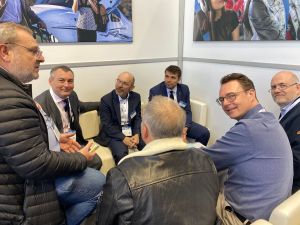
With strong industry participation already confirmed and growing interest in business aviation and sustainable flight, AERO 2026 is set to reaffirm its role as the annual meeting point for the European GA community. Of course IAOPA EU will be present at the fair (see picture to the left)
Stadtlohn Fly-In: where Dutch and German GA meet
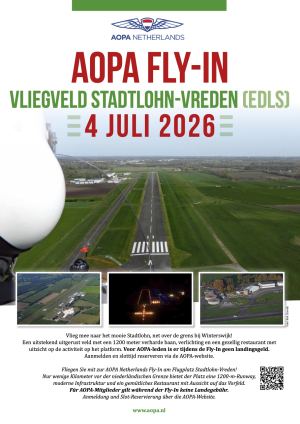
On 4 July, AOPA Netherlands (organizer) and AOPA Germany will host a joint fly-in at Stadtlohn-Vreden (EDLS), right across the Dutch-German border. The event is designed as a low-threshold gathering to bring pilots from both countries together and strengthen cross-border cooperation within the European GA community.
Stadtlohn is a well-established GA airfield known for its accessibility, pilot-friendly environment and excellent infrastructure. With a 1,240-metre paved runway, full lighting and long-standing Night VFR operations, it accommodates a wide range of aircraft, from ultralights to high-performance touring types.
The airfield has a distinctly international character: up to 40% of its users are Dutch pilots, reflecting its location just minutes from the border. Despite this, structured interaction between Dutch and German GA communities has historically been limited. Something this joint fly-in aims to change.
Participants can expect a welcoming atmosphere, efficient operations and attractive costs, with relatively low landing fees and competitive fuel prices. Beyond the flying, the emphasis is on meeting fellow pilots, exchanging experiences and demonstrating how naturally GA transcends national borders.
This joint initiative highlights the shared interests of Europe’s GA community and shows that sometimes, the most meaningful connections are made just across the border. More information and registration here.
News from ICAO, by Frank Hofmann
At its 231st session in February 2026, the Air Navigation Commission of the International Civil Aviation Organization (ICAO) began the year with the election of a new leadership team and a review of its expanding work programme, which now includes 39 agenda items.
Several working groups addressed topics of growing relevance to general aviation. The Medical Protocol Study Group approved progress toward the introduction of a Digital Pilot License (DPL), with ICAO expected to develop technical specifications while recognition by States will remain voluntary.
Other discussions focused on Detect and Avoid systems for remotely piloted aircraft, the challenges of setting realistic applicability dates for new ICAO standards, and the development of updated approaches to pilot mental-health risk management.
ICAO is also examining the potential role of Artificial Intelligence in air traffic management and the wider aviation system, with a survey underway to inform possible future policy or regulatory guidance.
IAOPA Europe voice heard in EASA PBN/IR working group
IAOPA Europe continues to play an active role in the European Union Aviation Safety Agency (EASA) rulemaking work on Performance-Based Navigation (PBN) and Instrument Rating (IR). Representing IAOPA Europe, Martin Antvik is taking part in a series of working group meetings, providing direct input on behalf of the European GA community.
Reporting from the sessions, Antvik notes that there is broad recognition within the group of the importance of expanding GNSS and SBAS-based approaches. These developments are seen as key to improving IFR accessibility at smaller aerodromes across Europe. At the same time, IAOPA Europe is emphasising that the transition must be based on operational benefits. Not on the forced removal of existing capabilities.
A key issue under discussion is the proposed phase-out of conventional approaches after 2030. Antvik has underlined that such a move would risk reducing safety margins, particularly for GA aircraft that lack DME/DME RNAV capability. A continued VOR network, he argues, remains essential as a practical and widely available backup in the European context.
Another concern raised in the group is the increasing complexity of IFR operations. As conventional procedures disappear, stringent planning requirements could unintentionally push pilots toward VFR in marginal conditions. According to Antvik, this highlights the need for proportional regulation that reflects real-world GA operations rather than theoretical capability.
Cost is also emerging as a major barrier. Antvik reports that procedure development and review costs at European aerodromes have increased dramatically, by as much as five to ten times in some cases. This trend threatens the sustainability of IFR procedures at smaller airports, directly affecting accessibility for GA.
In addition, IAOPA Europe is advocating for updates to FCL.615 IR and related guidance material. As Antvik points out, current requirements were developed in a very different infrastructure environment. Ensuring that IR training and checking remain practical – without over-reliance on simulators – will require sufficient availability of diverse approach types.
While many stakeholders share similar concerns, IAOPA Europe continues to stress the need for a balanced outcome: one that supports innovation through PBN, while preserving redundancy, accessibility, and operational flexibility for general aviation.
IAOPA Europe encourages members to share feedback to support its ongoing contribution to this important rulemaking process.
New IAOPA Europe Member Benefit: MyGoFlight
IAOPA Europe is pleased to introduce a new member benefit in partnership with MyGoFlight, a leading U.S.-based manufacturer of premium aviation accessories.
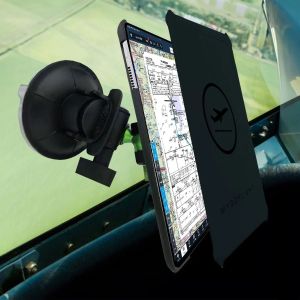
Founded in 2010 and headquartered in Denver, Colorado, MyGoFlight has built a strong reputation for designing high-performance cockpit solutions “by pilots, for pilots.” Their product range includes advanced tablet and smartphone mounts, kneeboards, protective cases, power solutions, and flight bags, engineered to enhance safety, organisation, and usability in the cockpit.
Particularly well known are MyGoFlight’s versatile mounting systems for iPads and other devices, offering secure and flexible installation options across a wide range of aircraft types. Combined with durable materials and thoughtful design, these products are widely used by both private and professional pilots. Check out the entire range at mygoflight.com
IAOPA Europe members can now benefit from an exclusive discount. Please use the IAOPA Member verification page to get access to a 20% discount code valid across the MyGoFlight product range.
This new partnership underlines IAOPA Europe’s commitment to delivering practical, high-quality benefits to its members across the continent.
All current memberbenefits can be found here.
ForeFlight blogs: High country flying & Flying through storms
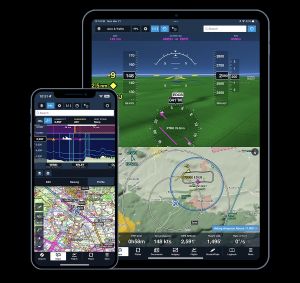
Learn how to safely and effectively fly through mountain terrain and navigate around storms with guidance from Jessica Burch, a meteorologist and experienced pilot. See how you can use ForeFlight to support your flying in challenging conditions.
High-country flying
There’s truly something magical about soaring through a valley surrounded by jagged peaks, sunlight bouncing off the ridgelines as cool air rushes past your wingtips or rotorblades. But behind all of that beauty lie plenty of flying challenges. Mountain flying introduces unique variables like vertical drafts, turbulence, shifting density altitude, narrow passes, strong winds aloft, and a powerful phenomenon called mountain waves. Read the full blog
Flying through storms
Anytime you’re up in the air, you know the weather can change quickly. Among all weather hazards, thunderstorms are some of the most intimidating and dangerous. They can shake up your flight, cause turbulence, and sometimes even threaten safety if you’re not prepared. The good news is, with the tools we have, pilots are able to spot storms early, plan smarter routes, and make quick decisions that keep everyone safe. Read the full blog
And if you want to read more blogs, please click here.
Airfield Directory: A new open European platform for GA airfield information
IAOPA Europe is drawing attention to a new community-driven initiative that aims to improve access to operational information for general aviation pilots across Europe: Airfield Directory.
The project, developed by AOPA Germany member Thomas Witt, is a free, open, and non-commercial online platform that collects and publishes pilot-written airfield reports (“PIREPs”), landing fees, fuel prices, and operational notes for GA airfields. The concept is often described as a “Wikipedia for airports”, designed to make essential flight planning information easily accessible, reusable, and openly available.
Within just four months, the platform has already gathered over 540 airfield reports, with contributions coming from across Europe, including the UK, France, the Netherlands and beyond. All content is automatically translated into six languages (DE, EN, ES, FR, IT, NL), supporting cross-border accessibility and the European GA community.
Key features include:
-
Community-written airfield reports under an open Creative Commons license
-
Landing fees and fuel price information
-
Interactive maps and advanced filtering
-
Integrated webcams and weather data
-
Multilingual auto-translation
-
Telegram bot access for low-bandwidth environments
-
Open data access and APIs for integration with other platforms
The platform is already supported and featured by AOPA Germany, and discussions are ongoing about possible cooperation with international partners, including AOPA USA and other data providers.
IAOPA Europe sees this as a positive, pilot-driven initiative that aligns strongly with the goals of accessibility, safety, transparency, and cross-border cooperation in general aviation. Members are encouraged to explore the platform, contribute reports, and support the development of this open European information resource.
Last month we also gave you this article, but we forgot the link to the Airfield Directory. You find the Airfield Directory here.
Return to Georgia: A Decade After a Pioneering GA Expedition
Ten years after a first pioneering group flight from Luxembourg to Georgia, European general aviation pilots are preparing for a new expedition to the Caucasus in late summer 2026. The initiative is led by Peter Sodermans, Honorary Consul of Georgia and former President of AOPA Luxembourg, who also initiated the original expedition in 2016.
What was once a complex logistical challenge – navigating permits, airspace procedures and unfamiliar territory – has evolved into a realistic long-distance adventure for well-prepared private pilots. The original expedition, involving 12 aircraft and 45 participants, demonstrated not only the feasibility of such a journey but also Georgia’s strong openness to general aviation.
Since then, the country has made significant progress in aligning with European aviation standards, including the introduction of a modern ULM framework and continued investment in infrastructure.
The 2026 expedition will once again follow a route via Central Europe and Turkey to Georgia, culminating in Kakheti, where a new GA-focused runway is being completed near the Ambassadori Resort. The arrival will coincide with the official opening of this airstrip, underlining Georgia’s ambition to attract more GA traffic.
With around 20 aircraft already pre-registered and a diverse fleet expected – from microlights to traditional GA aircraft – the initiative highlights both the growing capabilities of modern light aviation and the enduring appeal of international flying adventures. It is worth noting that more than half of the approximately 34 participating aircraft are expected to be ultralights. The ultralight scene has clearly come of age over the past decade. Modern aircraft such as the Blackwing are now capable of undertaking complex international flights and are often better equipped than many traditional general aviation aircraft.
Beyond the flying itself, the expedition aims to promote cultural exchange, tourism and cooperation – core values shared across the European GA community.
Pilots interested in participating in the expedition can register via peter@privatepilot.lu.
Please keep us informed about the aviation news in your country
If you have any news or things that you would like to share with pilots in other countries - for instance if you organize a Fly-in that might be of interest or if there is news about airports or new rules and regulations in your country that other pilots should know.
Please don't hesitate to send all your news to me: Gerrit Brand | Netherlands | email: gerritbrand@hotmail.com, telephone or whatsapp + 31 6 50831893
|